[Date Prev][Date Next][Thread Prev][Thread Next]
Thread Index
Date Index
Subject Index
Fly casting robot / 3 SLP's ! / Great website
- Subject: Fly casting robot / 3 SLP's ! / Great website
- Date: Tue, 17 Feb 2009 14:53:44 -0500
Walter & Group...
Server Sadik answers Al Buhr with discussion re
Al's message on his "casting machine". This adds another complexity
to casting mechanics: Consideration of damping (energy absorbtion) and the
pliability of the casting hand. G :-
Al,
What an ambitious project it was to build a casting
machine!! It is too bad that the human-fly rod-fly line system is so
complicated. One way to begin examining the complications for humans
casting is to put your hand palm upward on a desk or table surface and take the
smooth end of a writing pen and press down on the fleshy part of your
palm. I would guess it is easy to move the pen downward 1/2 inch and not
impossible to move it 3/4 inch. Similar, as well as other effects, when
holding a rod are unavoidable and they cause a number of behaviors we care
about
1) the soft connections create time
delays and the system acts slower - it takes time to do things to the system and
when the faster part of the system reacts (as in rod unloading) it acts against
slow stuff (I'm thinking ahead to further//future explanations of why a
caster can determine the maximum rod loading but that subsequent behavior is
pretty much programmed in and cannot be influenced or changed).
2) your machine system was
probably much faster reacting because it did not deflect//deform much when
load was applied. Depending on exactly how loads are applied or changed on
a machine without gaps//play, loads can be changed rapidly. This can cause
what are called higher modes of vibration to be excited (language that may be
used is -- "the second, third, and fourth modes we excited when we
did that" or "we generated multimodal response". If you placed your hand
on the rod in your machine my guess is you'd have no trouble feeling the
vibrations.
3) it is quite common for
folks (I have had these conversations with qualified engineers in the past who
had become brainwashed by terms they have seen in their textbooks) to
talk about damping. In fly casting their is no//little damping in the
sense that damping is defined in textbooks. To fit the texbook definition
the rod blank would have to absorb the energy - the rod blank is almost
incapable of absorbing energy and the only part of a rod with the ability to
absorb significant energy is the cork handle (An easy demonstration is to press
a strong fingernail into the cork - you do work in that process of
pressing. Almost all that energy is probably lost when you let-up on the
pressing load and in fact you can see the indentation that is associated with
the energy which was lost.)
4) Most energy has to be
absorbed by the human body in the hand and the limb muscles. This is
actually a process of performing negative work where the rod's kinetic energy
does work on the caster//is absorbed by the caster.
All this specialized intrinsic cushioning and energy
absorption separates a rod in a human's hand from a rod controlled by a machine
with metal components.
I hope we cross paths because it would be so interesting to
hear about your machines!!
Regards - Server
~~~~~~~~~~~~~~~~~~~~~~~~~~~~~~~~~~~~~~~~~~~~~~~~~~~~~~~~~~~~~~~~~~~~~~~~~~~~~~~~~~~~~~~~~~
From Ally
Gowans:
Hi
Gordy,
Knowing how talented
and particular Al Buhr is I would have said that he had as good a chance of
building a successful casting machine as anyone. It is not surprising that the
result was less than perfect because all the scientific knowledge we have does
not come close to understanding the behaviour of the human body.
I like the 500fps video
published by Jason Borger (http://jasonborger.com/the-rod-the-cast/)
showing Grunde Løvoll (Ph.D) casting
complete with the rod tip track indicated. This illustrates the difficulty of
applying detailed science to fly casting. You see the “stop” RSP then another
RSP as the angler controls rebound and then after “follow through” the final
“RSP” if you like. At the first RSP the rod parts still have momentum which
forces the tip into counterflex, at counterflex the blank fibers either side of
the curved blank are in compression or tension and are storing energy that
causes rebound and this counterflex/rebound energy interchange might sustain for
a time but for the damping effect of the line and the human body because when a
good caster “stops” the rod grip is relaxed and often the rod butt is moved to
minimise disturbance. If you clamp a section of rod blank solidly at one end,
deflect it and release it quickly you will see these harmonic vibrations
decaying over time as the friction and windage effects dissipate the energy, not
what we want during a cast! We often observe the affects of counterflex in a
poorly executed cast but rebound is not so prevalent because it is smaller and
the dampening effect of the body and line are effective. If you want to see
these effects while you cast just grip the rod very tight during and after
delivery and observe the sine waves in the line. Al’s machine would have
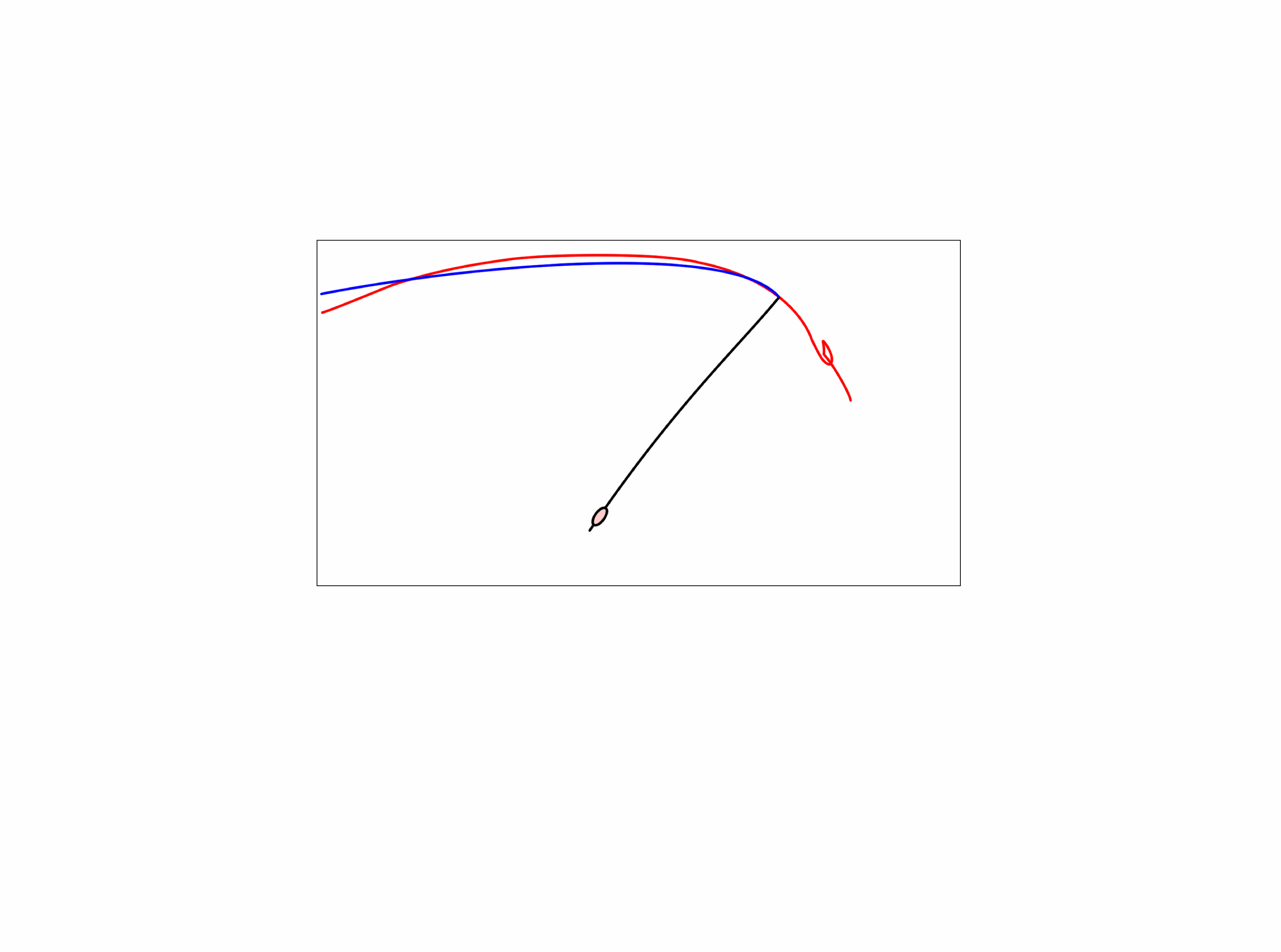
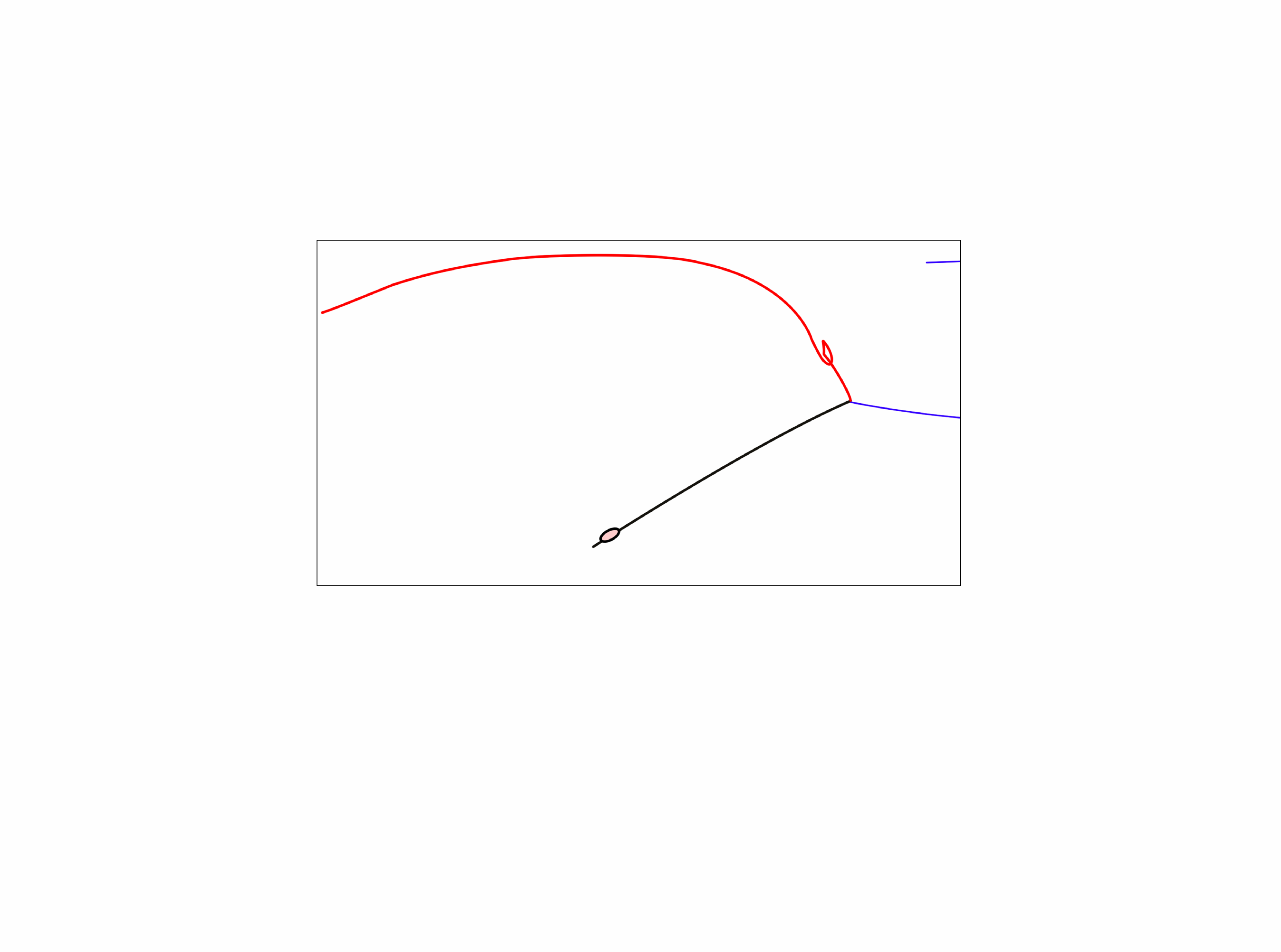
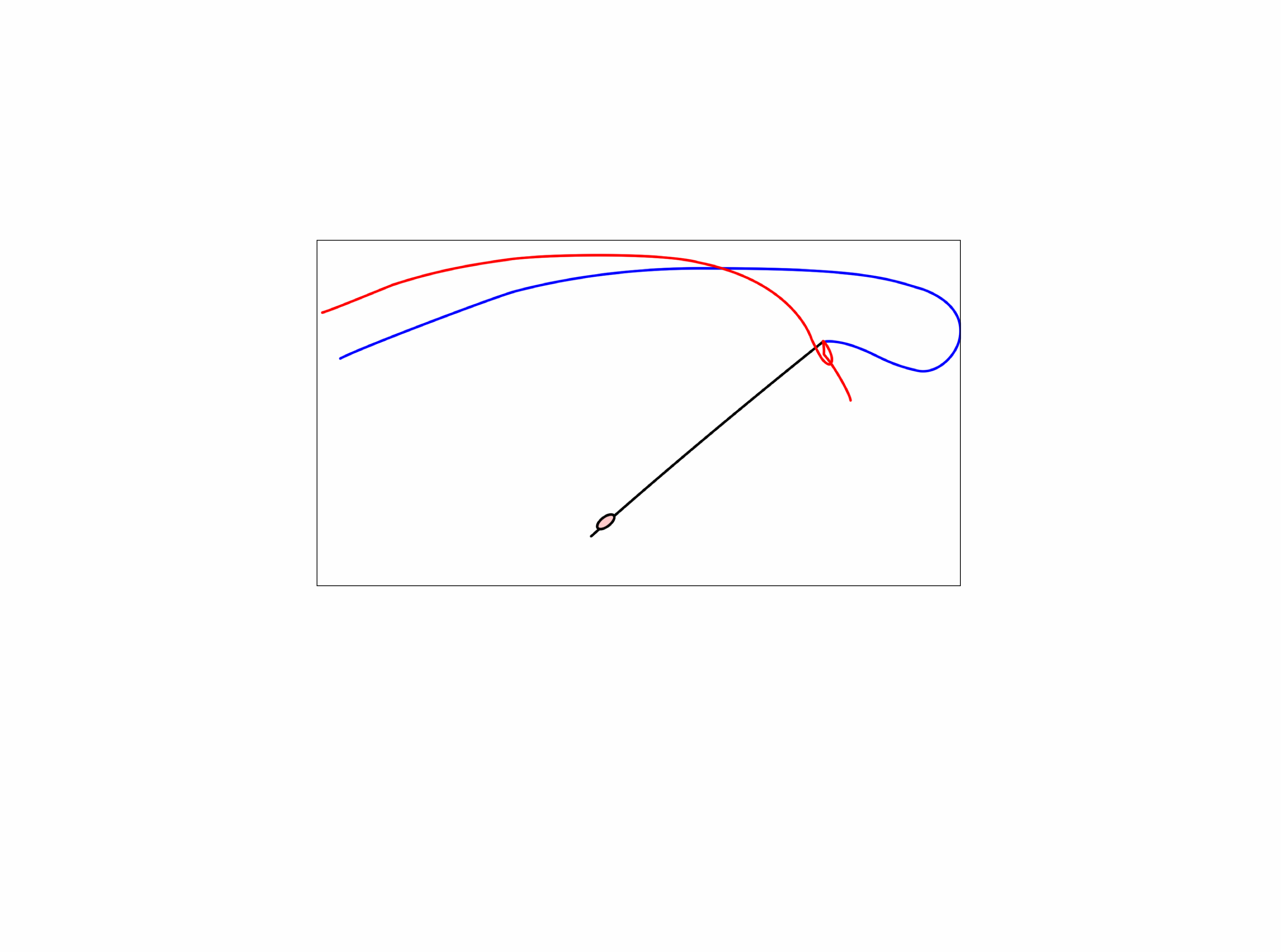
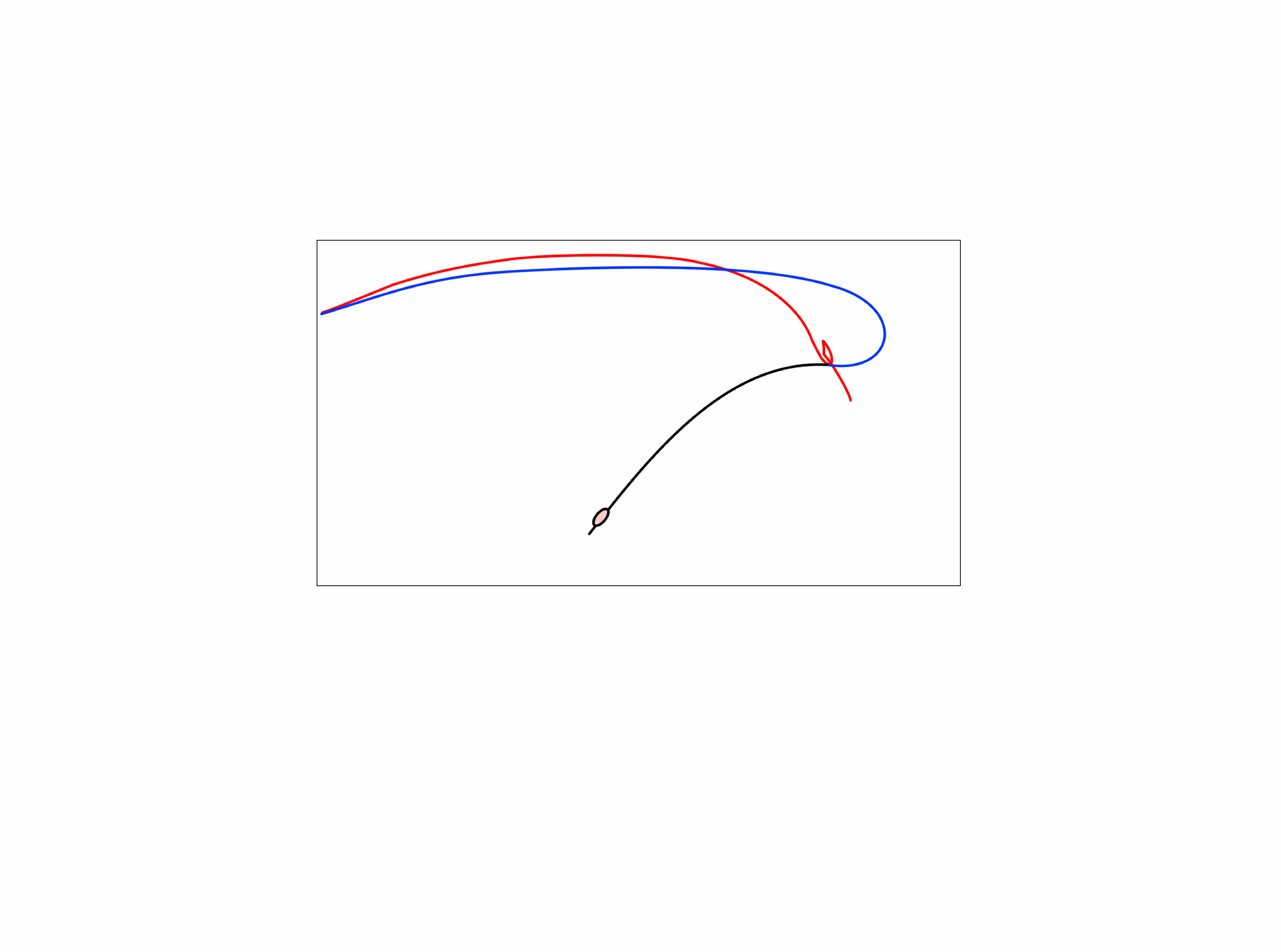
suffered similarly. I have attached some sketches taken from the video referred
to which illustrate the movement of the rod tip. Sketch 1 shows RSP, 2 shows max
counterflex, 3 shows max rebound by which time the caster has the rod under
control hence it is straight and 4 shows the adjustment made by the caster
during line flight (follow through). It’s also worth noting how the line path is
very similar to the rod path as expected.
An aspect of casting that we have
not yet thought about is harmonics or resonance during casting. For every
rod/line combination, for every cast made there is a “most efficient” method of
delivering energy to the rod to get the most from it. We can’t do it every time
but just occasionally we “get it right” we “hit a sweet spot” and a cast goes
exceedingly well for what appeared to be little effort. Using resonance or
vibration as it was called about a hundred years ago optimizes performance and
the secret is to tune your cadence to the rod, question is
how?
Best
wishes,
Ally
Gowans
~~~~~~~~~~~~~~~~~~~~~~~~~~~~~~~~~~~~~~~~~~~~~~~~~~~~~~~~~~~~~~~~~~~~~~~~~~~~~~~~~~~~~~~~~
Ally.... Fascinating
! To think we now have 3 SLP'S.
The more we study this stuff, the more
we learn .... yet, at the same time, the more we need
to learn. I hope we never completely fathom all the complexities of fly
casting, just as I hope and pray we never find the one perfect fly
!
I've included your
attachments.
Gordy
````````````````````````````````````````````````````````````````````````````````````````````````````````````````````````````````````````````````````````````````
WEBSITE - Loop connections
~~~~~~~~~~~~~~~~~~~~~~~~~~~~~~~~~~~~~~~~~~~~~~~~~~~~~~~~~~~~~~~~~~~~~~~~~~~~~~~~~~~~~~`
Let me emphasize something from
Lefty's message: Dan Blanton's website, www.danblanton.com . This
presents a wealth of information of all kinds, especially for those interested
in salt water fly fishing.
I've already made some of the braided
hollow core nylon fly line loops and will soon put them to the test .... not
simply with the line tester, but with shock tests and (best of all) use in
actual fishing situations. I doubt I'll find anything different than that
reported by Lefty.
One question will be whether or not
these connections using soft pliable woven material will effect casting or loop
turnover. That will be important for me to find out especially when pin
point accuracy and careful layout are needed when fly fishing for permit.
(Probably wouldn't make much difference when making short casts with very large
flies to billfish. )
One omission so far in our discussions
on fly line loops, is the welded loop which Airflo has placed on the ends of
some of their fly lines. I have field tested them and find they are very
smooth and don't catch on the tip top or guides. They test at
almost the tensile strength of the fly
line core itself. Bruce Richards has discussed the pros and cons of using
those welded loops on the ends of some of the SA fly
lines.
Gordy
Attachment:
slpvideo 1.PNG
Description: PNG image
Attachment:
slpvideo 4.PNG
Description: PNG image
Attachment:
slpvideo 3.PNG
Description: PNG image
Attachment:
slpvideo 2.PNG
Description: PNG image