Walter & Group....
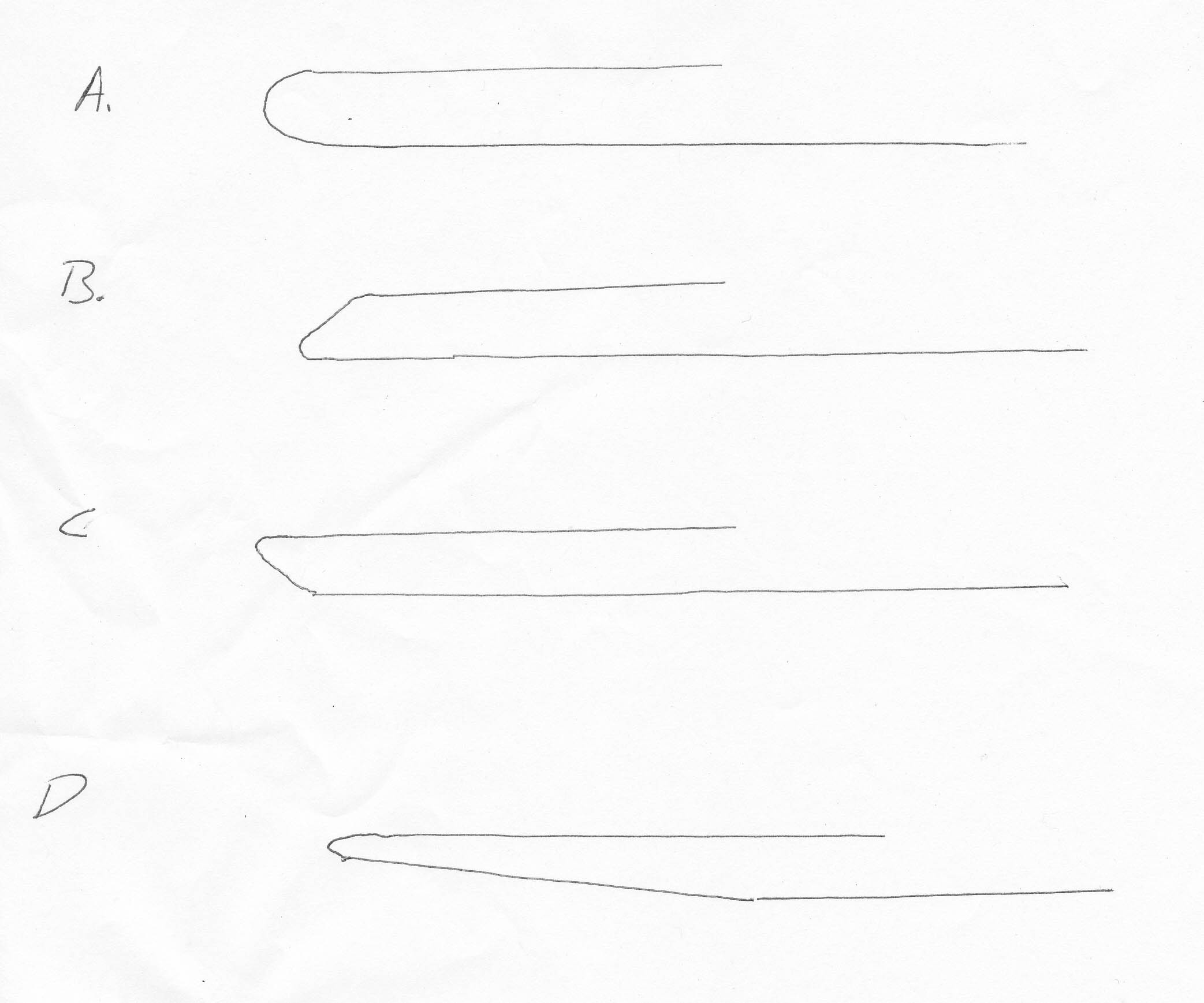
Once again, I've placed the diagrams of "loop faces" in an attachment to make it easier for all to follow this string of messages. G.
~~~~~~~~~~~~~~~~~~~~~~~~~~~~~~~~~~~~~~~~~~~~~~~~~~~~~~~~~~~~~~~~~~~~~~~~~~~~~~~~~~~~~~~~~~~~~~~~~~~~~
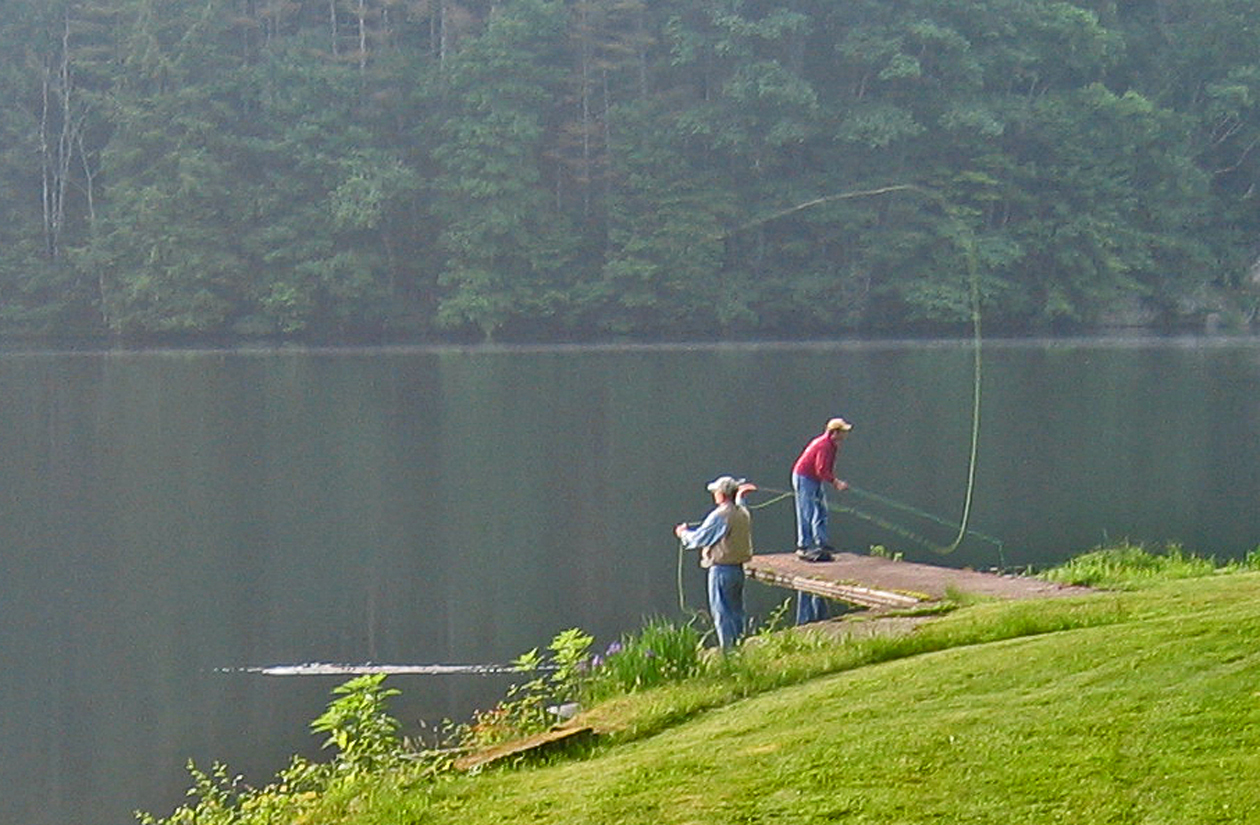
From David Lambert. I placed his photo of the "Big Bad Loop" in a second attachment. G.
Gordy, hey -
I played with Mac Brown's face shapes this weekend. I'm resending the
most difficult loop shape photo I've ever seen. I'd love to have
someone tell me how to do this one. A 12 - 15 foot square loop.
(Brilliant wrist control and timing which I've never mastered.)
In recreating Mac's, first, assumptions.
1. No hauls in A. B, or C. I had to haul for Loop D. Others were
achieved with rod hand and line tucked under index finger (although some
were easier to reproduce with hauls involved).
2. Strong loop formation skills in all. Proper acceleration, rod
direction and planes.
3. These are full parallel loop legs (since we have no angle of
perspective).
That said. These are, to the best of my language, how I produced the
following:
Loop A. Two ways. Either, 1) Tip drops from fly leg (line of cast),
stops well and is fully damped. Minimal, controlled or no counterflex
(can't tell) and no tip motion toward or away from, or perpendicular to,
unrolling loop; or, 2) Rod tip stops, primary counterflex and recoil
occur, but line mass and directed energy pull loop into parallel legs,
straightening out the loop in to thin parallel legs.
Loop B. - Slightly abrupt, abbreviated initial stop, then immediate
slight forward thrust or perpendicular tip rotation slightly slower than
forward moving loop to essentially a second final 'stop inches below the
first and forward soft forward follow through
Loop C. - Abbreviated initial stop, the slight recall of tip to a second
stop. This made in slightly climbing loop. reproduceable in mid-length
but not longer loops ( 85+ feet)
Loop D - While mac doesn't show this, I recreated this in a climbing
loop only in longer casts by stopping the rod tip in an (say) a 5 degree
upward incline, then dropping the rod tip off the line of the cast, then
pulling the tip opposite the unrolling cast, then creating a sharp short
final stop. That doesn't sound exactly right, but I can't describe it
better.
Surely others have played with recreating these loops. Love to see how
they got them, or better explanations. But there you have my attempts.
David
~~~~~~~~~~~~~~~~~~~~~~~~~~~~~~~~~~~~~~~~~~~~~~~~~~~~~~~~~~~~~~~~~~~~~~~~~~~~~~~~~~~~~~~~~~~~~~~~~~
David .... As I try to make various loop shapes, I really can't see them well enough because I'm the caster standing necessarily behind the loop ..... so I rely on my casting buddies to correct my opinion on what I think I'm seeing. Sure, I can tell if my loop is small or large, tail or no and I can see a point or a blunt end; just that I can't appreciate the details of shape for the smaller loops.
So much depends upon the point of view of the observer.
When standing to the side as an observer, sometimes a needle sharp loop made with the caster using an off horizontal casting plane will appear rounded and larger with an off vertical loop plane to the observer standing behind . Sometimes even wider if we look at that loop (as I often do) from the elevated balcony of my home or that of my neighbor ( stilt houses because of hurricanes, 16' above ground + my eye height).
When Tom White videoed some of our loops from the side, they often appeared a lot different than they had to the caster.
This is one reason that the MCCI Testing Committee came up with the recommendation that the candidate should cast in a manner which would allow the students or class to clearly see the loops. That led to a heated discussion over whether or not we were dictating casting style.
Lately, I've been judging an MCCI candidate's loops with one examiner looking from the side and another from in back or well in front of the caster. I still do that even when the candidate has chosen to cast in a vertical casting plane so I don't miss a loop which looks fine from the side, but is wide laterally or curving behind the caster on the back cast.
I'm not saying you didn't really make the loop shapes you discuss .....I'm sure you did..... only that I don't know how you viewed them. Your stated methods of making them make sense, though.
I scratched my head over your picture of the "Big Bad Loop". I noted the angle of view... off to the side and partly behind the caster. I looked at the residual bend of the rod, too. All this made me wonder if this loop isn't a very wide one with fairly parallel loop legs in at least one plane. Rather than being square as it appears from the vantage point of the photographer, perhaps it is curved around a bit behind the caster and might appear rounded to an observer standing from the side. (?????)
Neat stuff !!!
Gordy
~~~~~~~~~~~~~~~~~~~~~~~~~~~~~~~~~~~~~~~~~~~~~~~~~~~~~~~~~~~~~~~~~~~~~~~~~~~~~~~~~~~~~~~~~~~~~~~
From Paul Arden,
Hi Gordy,
I used to see loop B a lot in the UK. The first I came across it in print was by a chap called Herb Spannagl (possibly NZ's finest caster - he's written over 100 casting articles, and that was 8 years ago. He popularised the "Tongariro Roll"). Super guy, great caster, you'd really get on well. He called loop B the "Rat's Snout".
I thought about this a lot and the way to form B is to curve the tip path, using a high trajectory backcast and tilt the rotation so that you are casting from just past the perpendicular to close to the horizontal. Using a clockface example it would be 12.30 -10. This is the traditional English style of casting, as taught by the late Peter MacKenzie-Philps in his book "Flycasting Handbook". Which is an interesting read. Very much outdated in many ways, but if you have a regimented caster (merchant banker, London laywer, army sergeant as sweeping examples) it certainly works.
No wrist, rotate through the stroke, cast from 12.30 to 10.
Cheers and thanks,
Paul=
~~~~~~~~~~~~~~~~~~~~~~~~~~~~~~~~~~~~~~~~~~~~~~~~~~~~~~~~~~~~~~~~~~~~~~~~~~~~~~~~~~~~~~~~~~~
Paul... Your wording suggests that you were observing loops which others had made from one side. That is one of the best way, I think, to determine loop shapes.
Your high trajectory back cast and rotational tilt (line plane high in back/low front trajectory) sounds a bit like Charles Ritz' "HL/HS' cast. *
Hopefully you are better than I am at checking out the details of your own loop shapes.
* A FLY FISHER'S LIFE by Charles Ritz, pp. 38-46.
Gordy
~~~~~~~~~~~~~~~~~~~~~~~~~~~~~~~~~~~~~~~~~~~~~~~~~~~~~~~~~~~~~~~~~~~~~~~~~~~~~~~~~~~~~~~~~~~~~~~~
From Mac Brown. He answers Bill Kiester and me re our messages from yesterday. He also refers to the Phillips/Mossler and Spolek references from my note. G. :
|
Hi Gordy, Thanks for the comments Bill! A buddy of mine in Cumbria named Lee
Cummings uses a term which I really like for observing various loop
shapes. He says, "lets have a look at it with our tension glasses". I
think the "tension glasses" can answer most about loop faces in/out of
balance of fly/rod leg. If we apply the six step method for these
shapes-it works like a charm.
~~~~~~~~~~~~~~~~~~~~~~~~~~~~~~~~~~~~~~~~~~~~~~~~~~~~~~~~~~~~~~~~~~~~~~~~~~~~~~~~~~~~~~~~~~~~~~~~ Mac ... Thanks. I never thought
about it from a standpoint of tension. I'll remember
that. I, also, heard the term "morph" as applied to changing
loops from Tim Rajeff.
G. PARABOLIC RODS, MORE ~~~~~~~~~~~~~~~~~~~~~~~~~~~~~~~~~~~~~~~~~~~~~~~~~~~~~~~~~~~~~~~~~~~~~~~~~~~~~~~~~~~~~~~~~~~~~~~~~~~~ From Troy Miller : Thanks
Gordy. I don?t know how to describe it any simpler or
clearer? I?ve observed
through attending many bamboo rodmakers gatherings that the strong
parabolic examples which are offered up on the rod racks for public
consumption tend to be the least favored rods at the event. The only
people who really seem to appreciate them are those who fish parabolics
only. It takes them considerably less time to dial in the energy
balance at different ranges, than for the average proficient caster.
The rods MUST be allowed to work with just a humble nudge from the caster.
In a battle of wills, the parabolic will beat an aggressive caster
every time. I recall spending
an entire afternoon carrying on a heated debate with a certain original
Pezon et Michel cane rod, inspired by Charles Ritz. It was making a
fool of me, calling me names, and generally discouraging me. After
90 minutes or more of working myself into a foamy froth, I finally sat
down for a break. Hanging my head, I started just stroking the
P&M back and forth without line out. When I used a gentle
stroke, it behaved. When I punched it a little bit, it jumped in
rebellion. All this with no line, mind you. The light went on.
If the rod acts like this when asked to self-load, then it does the
same with line load ? in spades. I strung it back up and within 3
minutes, figured out how to allow that rod to make the loops it wanted to
get out. Parabolics have a life of their own, not found in other rod
tapers. While I admire their individualism, I still don?t prefer
them. I want to be in control, from the second stroke on?
J Parabolic rods
are hard-headed. They won?t compromise. They will NOT meet in
the middle. It?s their way or the
highway. Anyways, that?s
just my take on them? Regards,
~~~~~~~~~~~~~~~~~~~~~~~~~~~~~~~~~~~~~~~~~~~~~~~~~~~~~~~~~~~~~~~~~~~~~~~~~~~~~~~~~~~~~~~~~~~~~~~~~~~ Troy... You had the patience to figure out that Pezon et Michel rod. I tried one and never did figure it out. Gordy ~~~~~~~~~~~~~~~~~~~~~~~~~~~~~~~~~~~~~~~~~~~~~~~~~~~~~~~~~~~~~~~~~~~~~~~~~~~~~~~~~~~~~~~~~~~~~~~~~~~ Words of sentement on parabolic rods from Liam Duffy : Hi
Gordy, Best
Regards, P.S. First round at the Conclave is on you ~~~~~~~~~~~~~~~~~~~~~~~~~~~~~~~~~~~~~~~~~~~~~~~~~~~~~~~~~~~~~~~~~~~~~~~~~~~~~~~~~~~~~~~~~~~~~~~~~ Liam ... Bring your devilish parabola and we then may need several rounds ! G.
|
Attachment:
loop faces.JPG
Description: JPEG image
Attachment:
bigbadLoopBlowup.jpg
Description: JPEG image