Walter & Group....
We need some more answers on the hook cast question on the table !
Gordy
~~~~~~~~~~~~~~~~~~~~~~~~~~~~~~~~~~~~~~~~~~~~~~~~~~~~~~~~~~~~~~~~~~~~~~~~~~~~~~~~~~~~~~~~~~~~~~~
From Mark Sedotti :
Troy,
EXCELLENT way to think about a curve cast. A tuck
cast to the side. I see it so clearly in my mind, and actually FEEL it too,
as I make that cast there (in my mind).
Once again you help me!
Good teacher. Hope you're doing well.
Mark
~~~~~~~~~~~~~~~~~~~~~~~~~~~~~~~~~~~~~~~~~~~~~~~~~~~~~~~~~~~~~~~~~~~~~~~~~~~~~~~~~~~~~~~~~~
Comment: That is a good way to look at the curve cast made using a horizontal rod plane, overpowering the cast, and stopping early.
By the same token, we can turn it around and look at the tuck cast as a powered vertical curve cast with a downward presentation.
Gordy
~~~~~~~~~~~~~~~~~~~~~~~~~~~~~~~~~~~~~~~~~~~~~~~~~~~~~~~~~~~~~~~~~~~~~~~~~~~~~~~~~~~~~~~~~~~~~~``
"Yarn flies" & "Braid fly"
~~~~~~~~~~~~~~~~~~~~~~~~~~~~~~~~~~~~~~~~~~~~~~~~~~~~~~~~~~~~~~~~~~~~~~~~~~~~~~~~~~~~~~~~~~~~~~~
From Mack Martin:
~~~~~~~~~~~~~~~~~~~~~~~~~~~~~~~~~~~~~~~~~~~~~~~~~~~~~~~~~~~~~~~~~~~~~~~~~~~~~~~~~~~~~~~~
Mack.... As I stated a couple of days ago, I make mine in a similar way but simpler, using package yarn. I can make it as sparse as needed by the number of fibers I pull off the one strand of three which I've unravelled. It won't float as well as the one you describe, however. I've tried spraying it with dry-fly-spray and that works for a few practice casts. Still doesn't really act like a real dry fly, though.
Gordy
~~~~~~~~~~~~~~~~~~~~~~~~~~~~~~~~~~~~~~~~~~~~~~~~~~~~~~~~~~~~~~~~~~~~~~~~~~~~~~~~~~~~~~~~~~~~~~~~~~
On this subject, from Mark Sedotti :
Of course yarn only, doesn't feel or respond like a fly. It isn't "weight
balanced". A small dry fly has the weight of the hook in
it which counteracts the drag of the wind resistent materials in
the fly. This neutralizes that drag and makes the fly very
castible. You want the correct balance between the weight in the fly
and the resistence of it's wind resistent materials to make a very castible
fly, if not simply a castible one. That hook there is VERY importent.
As you increase the amount of wind resistence in the
fly (and usually this relates to fly size too - as you get bigger) you
have to increase the amount of weight in the fly correspondingly, for
excellent fly castibility. I became aware of this while working on casting and
designing giant castible flies. "As above, so below" As with large (flies), it's
the same with small, (except with the small you need less weight - the smaller
the fly, the less weight you need)
I have to say that I
sometimes use just a bit of yarn without any hook or weight, and this works
OK. Just enough so I can still see the "fly". Too much yarn and
you're shot, it's just too imbalanced.
When I practice with the
giant flies though, they're accurately weight balanced. You'd be
surprized just how heavy they actually
are.
Mark
~~~~~~~~~~~~~~~~~~~~~~~~~~~~~~~~~~~~~~~~~~~~~~~~~~~~~~~~~~~~~~~~~~~~~~~~~~~~~~~~~~~~~~~~~
Mark... I once saw you throw some monster flies. (Looked like the whole chicken !) What is the longest one you've cast .... and its approximate weight ???
Gordy
~~~~~~~~~~~~~~~~~~~~~~~~~~~~~~~~~~~~~~~~~~~~~~~~~~~~~~~~~~~~~~~~~~~~~~~~~~~~~~~~~~~~~~~~~~~~~~~~~~~~
From Pat Blackwell:
Hi Gordy,
I use yarn flies and don't really have any problems
with them.
I like Glo Bug Yarn in Moss, it's a green chartreuse
that shows up well for me. I normally cut about a 1 inch piece and split it into
3 or 4 piece's. To attach it to the tippet; I first tie an overhand knot in
the end of the tippet, then form a second overhand knot that I put a piece of
the split out yarn in. Pulling that up tight allowing the tippet to slip until
the first overhand knot is snug against the second one that is holding the yarn.
I then trim the yarn back to about a size 12 or 14 dry fly and snip the tag end
of the tippet if it is to long.
I can see this little piece of
yarn well past 85 feet when laying on the ground, it is easy for me to see when
shooting targets even past 60 feet. I will admit that some of the folks that I
cast with have preferences for other colors and I agree they should use the
color that is easiest for them to see.
As for the size, when I was
preparing for the CCI exam I was instructed to cut it back to the smallest size
that I could readily see. It was amazing how little wind resistance it has
compared to a piece that would be about a the size of a # 8 dry
fly.
In conclusion I like very sparse yarn flies, with the best
part being; I don't worry about hitting the rod with a cutoff hook when I'm
experimenting or working on a new cast.
Regards
Pat
Blackwell
~~~~~~~~~~~~~~~~~~~~~~~~~~~~~~~~~~~~~~~~~~~~~~~~~~~~~~~~~~~~~~~~~~~~~~~~~~~~~~~~~~~~~~~
Pat... That sounds as though it would work fine. Two comments:
1.) The way Rick and I make up those little yarn flies with the light-wire hook cut off, the only bit of shank remaining is about 1/8" long and is buried in the head. The little hook eye is there for tying it to the leader, but I have never had a problem with it damaging a fly rod because its mass is minimal.
2.) When giving classes, I noted that before I went to these "flies", the students would tie the yarn onto the tippet in every way you could imagine. During the class, some of them would have the yarn fly off .... while tying on a new one, they are not paying attention... etc. Having an eye to which the tippet can be fastened has been a time saver.... and by passing these out, every one of my students is casting the same thing.
Gordy
~~~~~~~~~~~~~~~~~~~~~~~~~~~~~~~~~~~~~~~~~~~~~~~~~~~~~~~~~~~~~~~~~~~~~~~~~~~~~~~~~~~~~~~~~~~~~~~
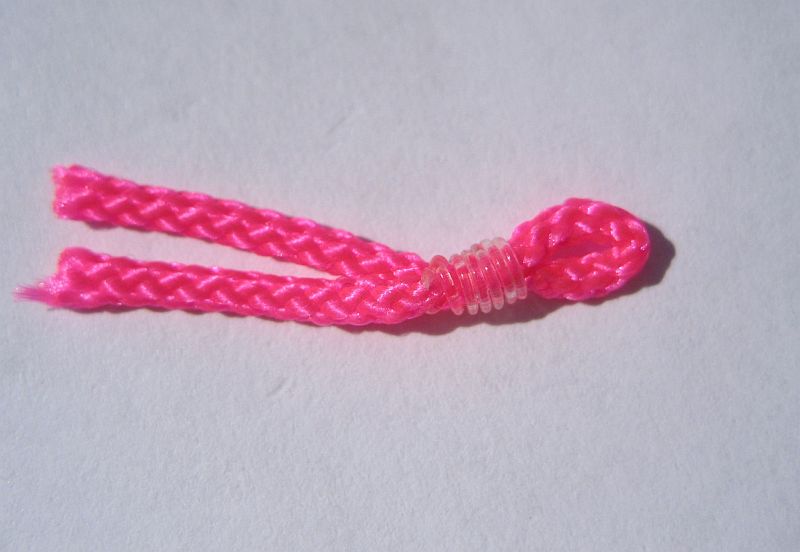
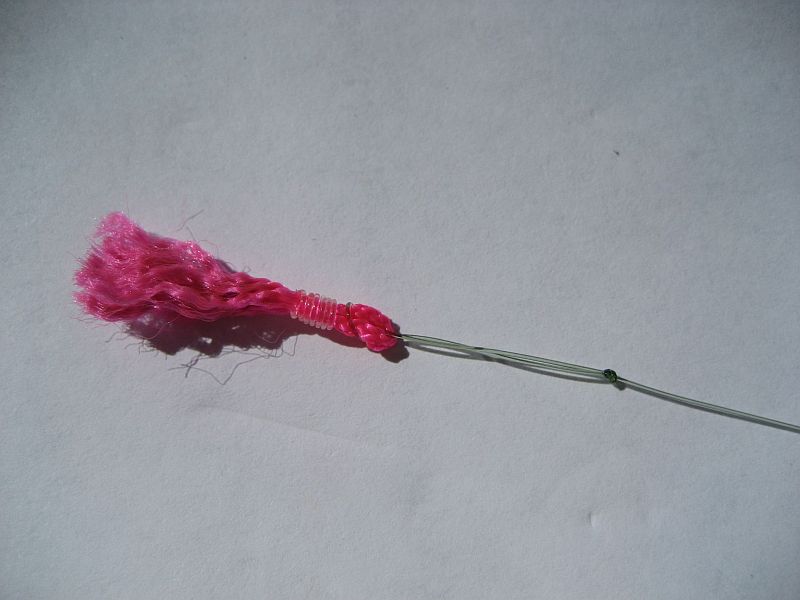
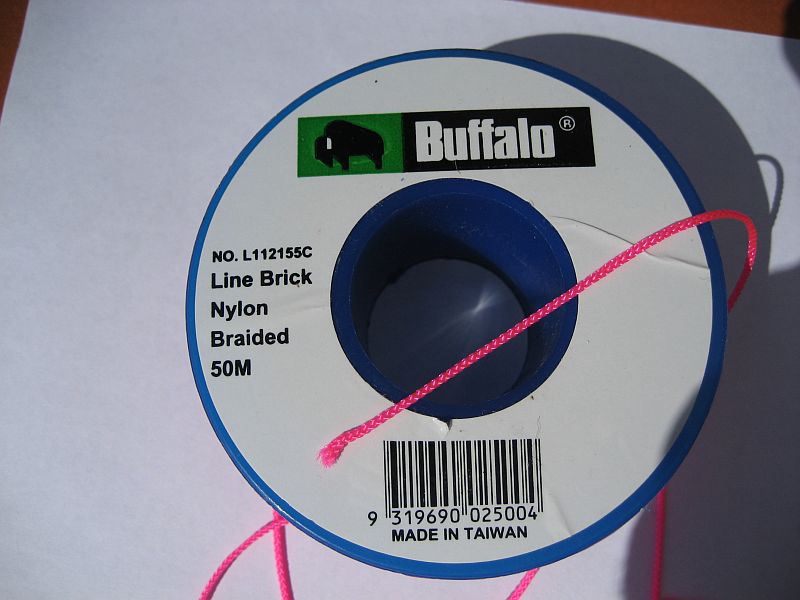
Tony Loader shares his method with us. Note his 3 attachments :
Attachment:
Braid fly1.jpg
Description: JPEG image
Attachment:
Braid Fly2.jpg
Description: JPEG image
Attachment:
Braid.jpg
Description: JPEG image