|
Walter & Group...
[GH] Hopefully, those of you who never expect to make a salt water fly fishing trip will put up with all this salty stuff for this and perhaps one more message. Then we'll move on to another topic.
Gordy
~~~~~~~~~~~~~~~~~~~~~~~~~~~~~~~~~~~~~~~~~~~~~~~~~~
[GH] Paul Rose relates some of this salty stuff to use in fresh water. He suggests a term we'd not heard before - "CARP TUNE-UP" :
Gordy,
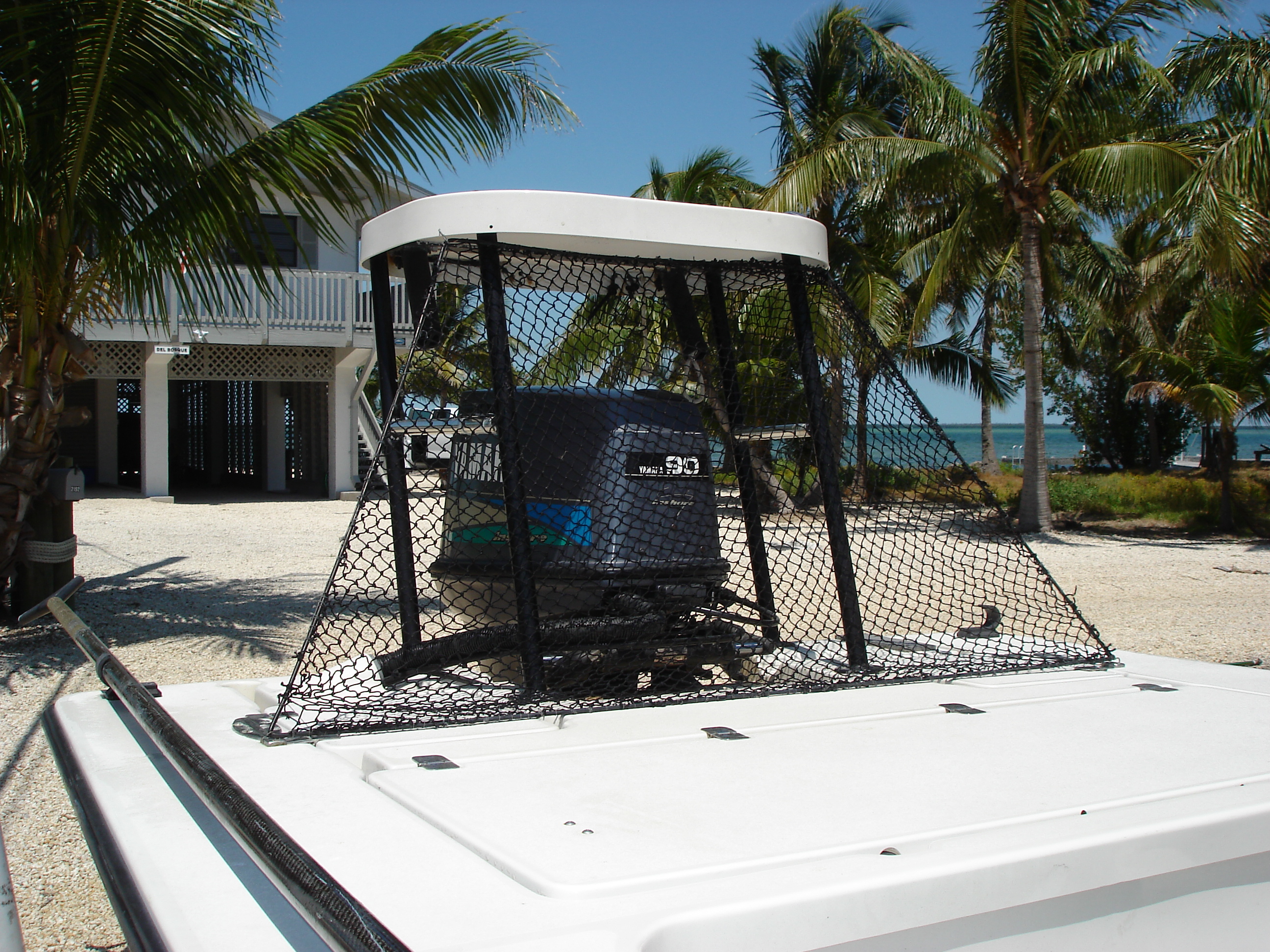
Really a great great thread you have got going. As a saltwater guide I often stake from the bow and fish the stern as well. I missed the net picture though. Please re-send.
I would be really interested as I have tried a couple ideas but not much success.
FYI: I fish for carp on freshwater flats. So for any of the guys thinking the salt is too far away, carp are an excellent alternative. It is really no secret anymore but many do not realize the correlation to salt flats.
I started guiding ten years ago when a local fly shop had a large group of anglers going on their first bonefish trip. None had fished much except for blue-lining or delayed harvest waters. I broke the group into pairs and went carpin' from my flats skiff. In one day I gave them a excellent feel for what to expect and practice in quick casts, fishing from the bow, line management, sighting fish, strip striking, working from the bow with a guide, even wading. etc. Many times anglers get thirty shots at tailing or mudding fish. No sharks either. If no one has tried carp as a tune-up yet, your missing a golden opportunity to be ready for the more glamourous trip.
--
Capt. Paul Rose
~~~~~~~~~~~~~~~~~~~~~~~~~~~~~~~~~~~~~~~~~~~~~~~~~~~~~~~~~~
[GH] Paul,
"Carp tune-up" . I love it.
Several others in the Group said they had failed to see that picture, so I'm including it with this message as an attachment.
I wonder if others can come up with fresh water scenarios where these techniques are used. (??)
You mentioned the strip strike. Most tarpon fishers use this. Trick is to wait after the fish has taken the fly until he turns away. Even then, it's best to let the line come tight and lots of rod bend... only THEN make the strike. Striking too soon is a mistake because it usually results in simply pulling the fly from the huge open mouth.
Jake Jordan has influenced many of us using an even more effective method. When a tarpon or billfish takes the fly, he points the rod right at the fish, lets it come tight and then simply has the fish make the "strike" against a very tight drag. Works great. *
Conventional wisdom tells us to bow to the jumping tarpon or sailfish. An alternative which works well is to plunge the rod tip forward and down into the water as the fish begins to rise to the jump. Sometimes works better than bowing to prevent the tippet from breaking.
We're learning new things as we go !
Peter Minnick took a 125 lb. tarpon on the flat three days ago while fishing with Bruce Chard and me. The unseasonably warm weather and warm water brought many tarpon in. Unusual for this time of year!
* No-Fail Billfish on Fly: Heavy Lifting Techniques, by Jerry Gibbs, The 2012 edition of the IGFA's annual World Record Game Fishes book.
Gordy
~~~~~~~~~~~~~~~~~~~~~~~~~~~~~~~~~~~~~~~~~~~~~~~~~~~~~~~~~~
[GH] Questions from Gary Meyer :
Gordy,
Now that everyone has their PhD in saltwater line management, could someone explain how these tactics differ in fresh water? I know this is not a THCI list, but I've always wondered how spey casters, seemingly always pictured standing deep in strong streams, manage all that line?
I'm also curious about the difference between coiling and looping? I've read that the latter is less likely to tangle?
Thanks
Gary Meyer
~~~~~~~~~~~~~~~~~~~~~~~~~~~~~~~~~~~~~~~~~~~~~~~~~~~~~~~~~~~~~~~~~
[GH] Gary,
I'll bet one of our THCI's will help you with answers.
Here is a hint: If you review the photos and drawings in a couple of well written books on two handed casting and Spey casting, you will note no loops held as is done with the Salt water quick casts and no use of stripping baskets. Of course, there is no boat deck upon which to coil line. You also don't see multiple loops of line dangling downstream or hanging from the hand. * **
* TWO-HANDED FLY CASTING Spey Casting Techniques, by Al Buhr, 2006.
** SPEY CASTING by Simon Gawesworth, 2004.
~~~~~~~~~~~~~~~~~~~~~~~~~~~~~~~~~~~~~~~~~~~~~~~~~~~~~~~~~~~~~~~~~
[GH] I've been asked about accuracy when teaching students to make those salty quick casts.
Yesterday, we were out on the flats fishing for permit. THAT is where speed and accuracy are critical!
When teaching these casts, I have the students do it on grass under different wind conditions using targets at 20', 30', 50', and 60'.
In general, I expect one back cast for a 20' or 30' target, two for a 50' target, and no more than three for greater distance.
Even when they get very good at that, the whole thing usually falls apart when I take them out on the skiff, especially with wind. The boat is rocking, and the "targets" are usually moving fish. The skiff is rocking a bit and may be moving or being turned.
On the water, I , first, have them cast to sponges, coral outcroppings and various stationary "markers" on the flat. Not so easy, since the skiff is moving and the wind usually blowing.
Then I pole down the flat and have them make accurate casts to moving fish .... not game fish, but any critter which moves such as rays, little sharks, bait fish, etc.
Once the student improves with that task, he needs to learn to do it FAST. (After all, these are quick casts). Of course, accuracy combined with speed is not easy under any conditions.
All this is just part of the whole learning scenario. By far the most difficult part is having them learn where to present and what to do with the retrieve for different fish species under varying conditions and different behavior patterns. That takes years to learn ! Experienced flats fishers learn to "read" the behavior of the quarry under all sorts of changing conditions and respond accordingly.
Jake Jordan and Bruce Chard are both very experienced Keys salt water fly fishing guides. They practiced accuracy and speed, years ago, by having one of them repeatedly toss pebbles into the water while the other made the casts. The idea, was to have the caster respond with a quick cast as fast and accurately as possible to the disturbance made by the little splash as the pebble landed in the water.
Frankly, I haven't done that, but I think it was a clever self teaching ploy !
Gordy
~~~~~~~~~~~~~~~~~~~~~~~~~~~~~~~~~~~~~~~~~~~~~~~~~~~~~~~~~~~
|
Attachment:
Maverick 004.jpg
Description: JPEG image