Walter & Group...
From Lou Bruno :
Gordy,
While doing a presentation on fly casting at a local
outdoor show I was asked the following questions.
?Why do you fly fish?? and ?What are
the advantages in fly fishing??
I thought the questions were trying to draw a comparison
between fly fishing and the ?other? types of
fishing.
If you find time I would be curious to see how the group
would answer the questions.
Regards,
Lou
~~~~~~~~~~~~~~~~~~~~~~~~~~~~~~~~~~~~~~~~~~~~~~~~~~~~~~~~~~~~~~~~~~~~~~~~~~~~
Lou : I've been asked the same questions when teaching at the IGFA. Never at an FFF event, because there, we are all fly fishers.
This question speaks to the very sport we all love. Not always easy to put the answer in words ...... comes from the heart !
Gordy
~~~~~~~~~~~~~~~~~~~~~~~~~~~~~~~~~~~~~~~~~~~~~~~~~~~~~~~~~~~~~~~~~~~~~~~~~~~
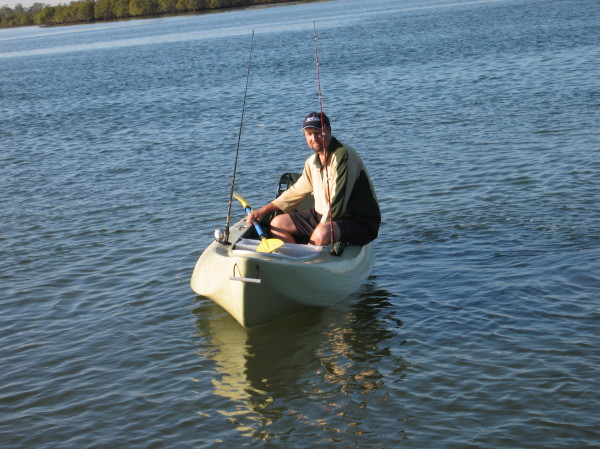
CANOE FISHING
~~~~~~~~~~~~~~~~~~~~~~~~~~~~~~~~~~~~~~~~~~~~~~~~~~~~~~~~~~~~~~~~~~~~~~~~~~
Some of you didn't get the attachnment sent by Bob Tabbert on casting out of a canoe from yesterday's message. I've attached it to this one.
G.
~~~~~~~~~~~~~~~~~~~~~~~~~~~~~~~~~~~~~~~~~~~~~~~~~~~~~~~~~~~~~~~~~~~~~~~~~~~~~
From Doug Swift :
A few
thoughts on fishing from a kayak.
I
fish a lot from a kayak for the reason you mentioned ??can get a lot closer to
fish without spooking them and you can get to places inaccessible to boats.
The
main areas fished are estuaries and water supply impoundments that have been
stocked with Australian Bass(grow to about 50cm),
I use
a roto-moulded sit on top type kayak as these have
better stability allowing more freedom of movement. It is one of the pedal varieties as
opposed to paddle which leaves both hands free for casting and fishing. However,
it is still a bit unstable to stand up on unless outriggers are
used.
Some
of the changes made for this type of fishing:
a.
Like
most of the many other saltwater fishermen, I prefer to wind with my dominant
right hand, however, because the rudder control is located on the left hand side
of the kayak, I have changed the reel over to left hand wind so that I don?t
have to change hands on the rod to steer while fighting a
fish.
b.
Because
you are sitting close to the water, the casting style has to change to an elbow
up type to clear the deck hardware and keep the fly out to the side so you can
see to steer the backcast between
obstacles.
c.
Using
a standard 9ft rod offered some problems. When the rod is stored for travelling, two feet protrudes past the bow making it
difficult to push through growth for fear of breaking the tip. It was awkward to
cast in tight timbered waters and landing a fish is more
difficult.
d.
No
suitable commercially available rods could be located so the option was to build
a 7ft 6wt for the smaller fish and an 8wt for the larger ones utilizing spin rod
blanks. These turned out to be are surprisingly good to cast and have sufficient
butt strength to handle the fish in the snag strewn country they inhabit.
e.
The
clear area in estuaries and the standing dead timber in the impoundments is restricted so carrying a lot of line in the air is not an
option. The solution is to use a short (20ft) headed line either made up from an
old damaged one or one of the commercially available lines (230gr on 6wt and
290gr on 8wt).
The
added advantages of this type of line are that they good for turning over bulky
surface flies and, as the majority of casts are under 50 ft, these lines allow
for quick one cast presentations.
The
technique is to peddle slowly along the about 30 to 40 feet out from the bank
making casts at likely holding places. When the fish strikes, set the hook and
move away into clear water in an endeavour to keep the
fish out of the standing and submerged obstacles.
Fishing
in the wind has particular problems. Not only do you have to contend with the
normal problems associated with fly casting in the wind but also maintaining the
position of the kayak as it tends to get blown across the water. The easiest
option is to fish up into the wind or with wind from directly behind and have a
small sea anchor to slow the rate of travel.
Unless
it is a dead calm day, fishing depths up to 12 metres
with sinking lines has problems as any wind will move the kayak out of position
before the line reaches the required depth. The technique used in this case is
to locate the school of fish or likely holding position on the sounder and
anchor down wind.
On an
unrelated topic ???I now use a Sage Smallmouth Bass 290gr line strung on a 7wt
TCX rod for teaching hauling instead of a shooting head??. the students find it
easier as they have less problems with judging the overhang.
Regards
Nial
Logan
LEARNING OPPORTUNITY
~~~~~~~~~~~~~~~~~~~~~~~~~~~~~~~~~~~~~~~~~~~~~~~~~~~~~~~~~~~~~~~~~~~~~~~~~~~
From Keith Richard :
Attachment:
Casting out of a canoe AFR Feb 27 Conclave 15 to 20 minutes max.doc
Description: Binary data
Attachment:
Canoe_1.jpg
Description: JPEG image