while we didn't see the wolves take any cutthroats, a friend and i were
packing out of slough creek a couple of years ago when we caught sight of a pack
of wolves (probably lamar valley wolves). they were playing like kids do on any
given hot summer day, splashing around, false charging, running up the creek,
jumping in the water... you name it.
~~~~~~~~~~~~~~~~~~~~~~~~~~~~~~~~~~~~~~~~~~~~~~~~~~~~~~~~~~~~~~~~~~~~~~~~~~~~~~~~~~~~~~
Hi
Gordy
Years a ago I read the books
of G.E.M. Skues. I still have them at home.
To
be honest I didn't used them. No, I have to confess, only
for one item because I knew something was missing "Ex Mortua Manu" (... libera nos domine"). I studied
latin at school. As you probally know you can not translate latin word
by word. You have to see it in the right context. Especially if it is part of an
_expression_.
The
questions where quite easy and I think that most of the European anglers,who
grew up with the English approach of flyfishing, can answer 7 to 8 correct
without reading Skues. The flies and flypatterns are still in use today.
During a flytyingclass about "Classic salmon flies" I learned what
gut was and how it was used.
Personal even better then Skues is
the book of J.C. Mottram "Flyfishing Some New Arts and Mysteries". Even for the
todays flyfisher it is full of "worth to know" info. Skues is sometimes
quoting Mottram in his book and if you read carefully, allthough they fished the
same water and where members of the same club, they seemed not to be the
best friends.
On
the other hand one of the best novels ever written is from the hand of
Skues. It is the story of Mr. Theodore Castwell. Everyone who takes his/her
flyfishing (too) serious should read the story.
A
second book I would like to advise you is "The Fly" by Andrew Herd. It is
covering the history of flyfishing. Hooks, rods, flylines, flyfishing for trout,
salmon, saltwater flyfishing all placed in the right context through the
ages.
As
Mr. Gary Borger says: "Tradition is both good and bad. The good think about
tradition is that it passes down knowledge from one generation to the next. The
bad thing about tradition is that it passes down knowledge from one
generation to the next". ..."Ex Mortua Manu "...
Regards,
Elie
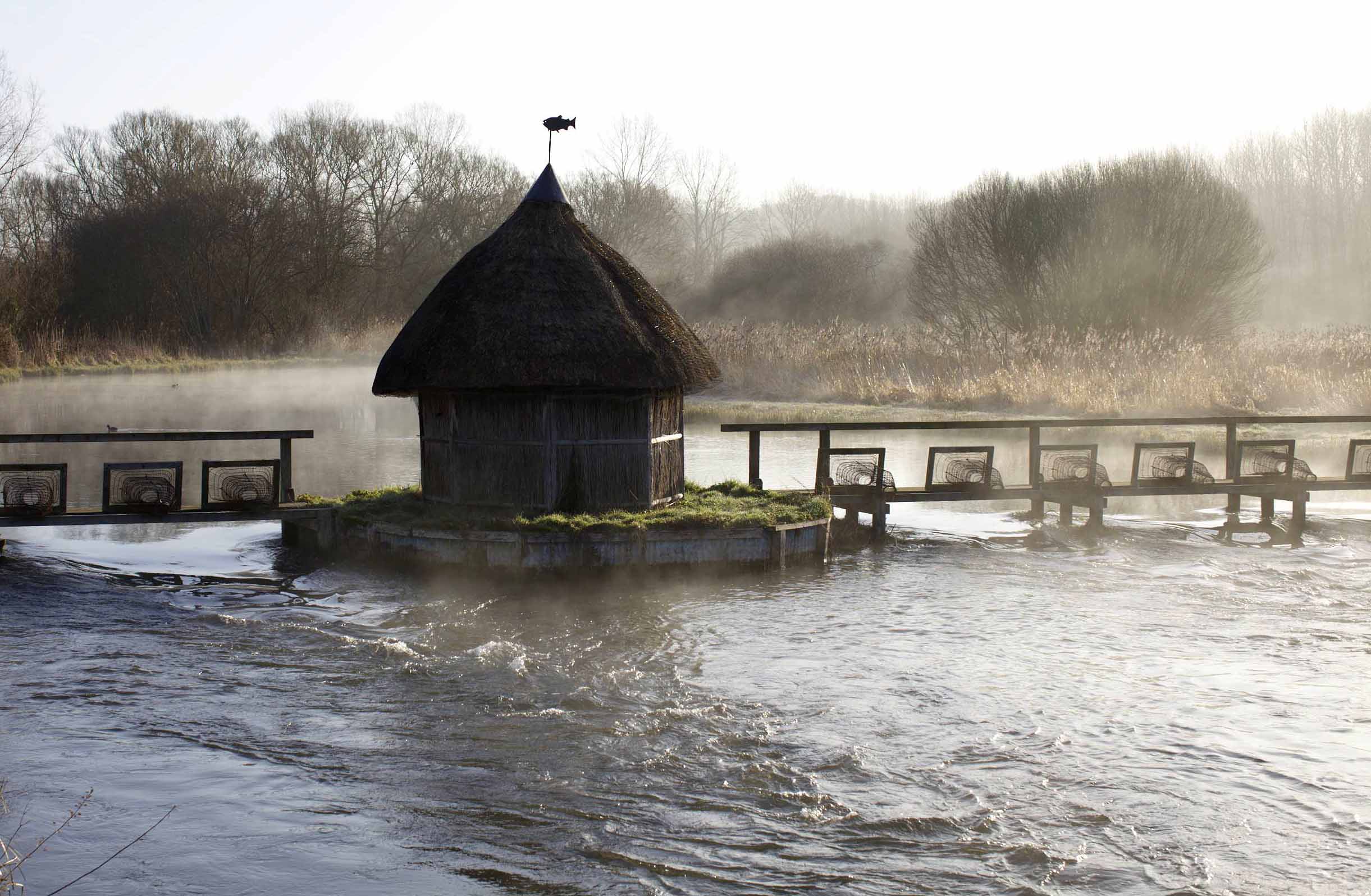
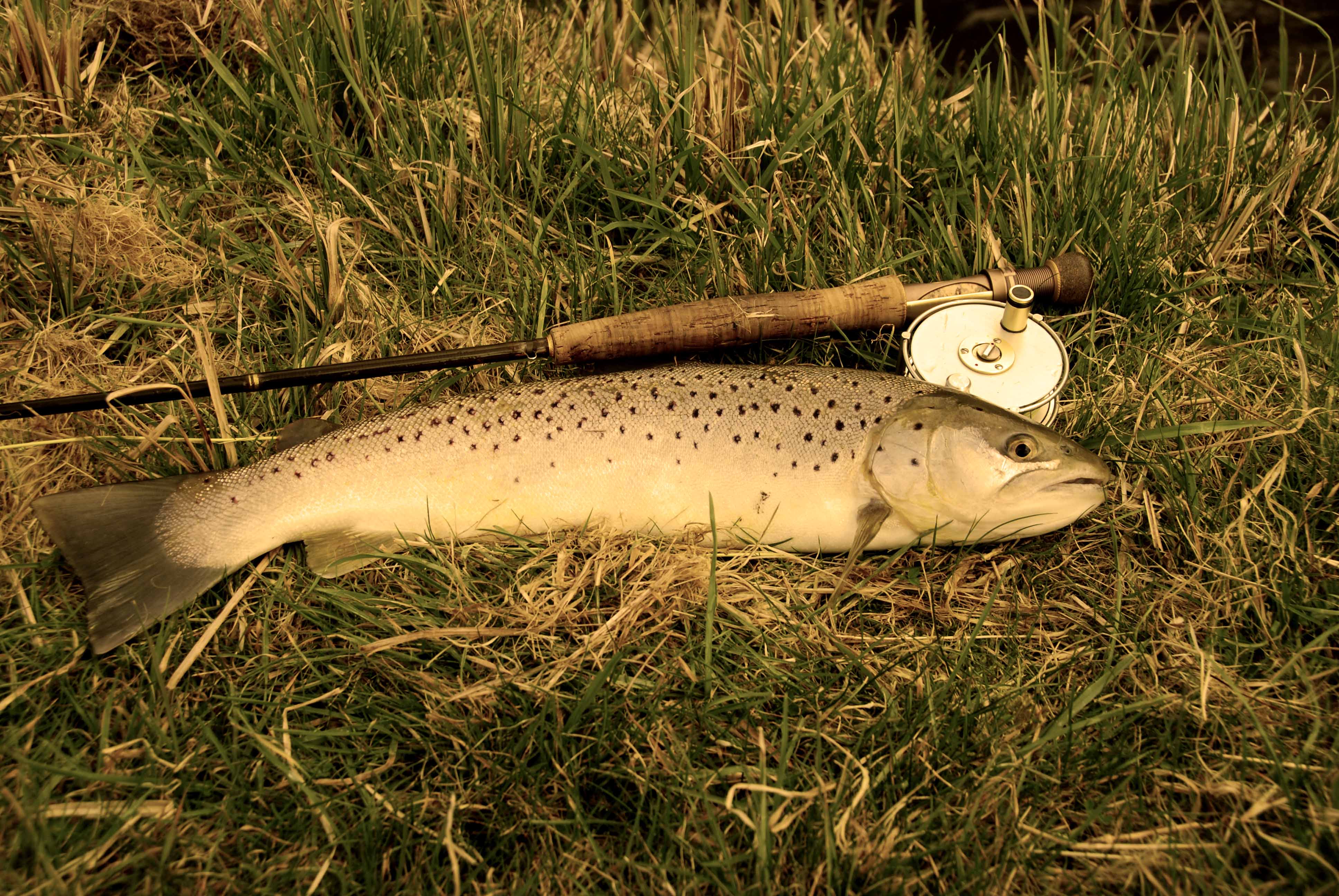
Ps: I've included 2
pictures taken on the river Test. One is taken early morning just
above the beat of the famous Houghton Club. You can see an old fishing
hut and the eel traps. The second is a nice brown trout in traditional sepia
colours.
~~~~~~~~~~~~~~~~~~~~~~~~~~~~~~~~~~~~~~~~~~~~~~~~~~~~~~~~~~~~~~~~~~~~~~~~~~~~~~~~~~~~~~~~
Elie...
Simply put, the reason the questions were so easy for you is that
you are a truly advanced student of our sport !
I
have read Mottram and agree with you ! THE FLY, by Anderw
Herd is one I have not tackled.... but will do so
forthwith.
Other historical references include TROUT by
Bergman, TROUT by Ernie Schwiebert (pp. 1 - 181) and the books
by Major John Walter Hills including his A HISTORY OF TLY-FISHING
FOR TROUT and SUMMER ON THE TEST.
Your
picture taken of the Test makes me wonder just what sort of eels they have
there. The eels of our USA East Coast (species: Anguilla bostoniensis)
spawn in the Sargasso Sea and migrate up our NE rivers. Years ago,
we had big problems with the "Hagfish" (Lampreys) migrating up into
our Great Lakes via the then newly constructed St. Lawrence seaway. These
are cyclostomes (species: Petromyzonas marinas) which attached themselves to the
lake trout (a large lake dwelling char ... Salvalinus namaycush) and become
parasitic eventually killing the fish. Methods of control were multiple
including the use of wiers and chemical compounds.
I've
always loved Skues' story, MR. THEODORE CASTWELL ! After having
read it years ago I again recalled it on a trip to Alaska as we waded
a particular gravel bar and took a silver salmon (Coho) on every single cast
until too tired to cast to another fish.
It
has been many years since I fished the Test. Don't know if true in this
day and age, but we were "required" to be dressed in "proper gentlemen's attire"
to avoid being asked to leave the stream ! No such thing when we moved up
to Scotland to fish for salmon.
Gordy
~~~~~~~~~~~~~~~~~~~~~~~~~~~~~~~~~~~~~~~~~~~~~~~~~~~~~~~~~~~~~~~~~~~~~~~~~~~~~~~~~~~~~~~~
ON "MOUSING THE BANK"
~~~~~~~~~~~~~~~~~~~~~~~~~~~~~~~~~~~~~~~~~~~~~~~~~~~~~~~~~~~~~~~~~~~~~~~~~~~~~~~~~~~~~~~~~~~~~~
From
Gary Davison:
Gordy,
Thanks for the picture and advice. I made my plans for Alaska.
Will be taking one day to fish on the Kasilof River the
28th. Mainly Trout, but hope to luck into a Salmon if opportunity
arises.
Fishing with a guide out of Soldotna who's name is Matt
Duncan. Looking forward to the trip. Let me know if you have
any last minute advice that would help me on my journey.
Thanks a bunch.
All the best.
Gary
~~~~~~~~~~~~~~~~~~~~~~~~~~~~~~~~~~~~~~~~~~~~~~~~~~~~~~~~~~~~~~~~~~~~~~~~~~~~~~~~~~~~~~
Gary....
Having caught all 5 species of Pacific
salmon there as well as Sheefish (Inconnu), Grayling, Dolly's and Bows, I found
the greatest pleasure in catching Leopard Rainbows by "mousing the
bank".
We tied up large hair mouse patterns,
greased them and cast them right next to the cut banks and "walked" or "swam"
them as close to the bank as we could. Those big bows would crash the mice
with vigor.
This method of fishing is a HOOT
!
One spring, our guides opened up the
camp on the Good News River and found hundreds of dead mice which had crawled up
into the galley stove pipe.... probably to get warm, and then froze during the
winter. When the mice were cleaned out of the pipe and dumped in the
river, the rainbows appeared out of nowhere and engulfed them. They
watched in awe as the feeding frenzy drifted down river like a living raft of
activity.
Gordy
~~~~~~~~~~~~~~~~~~~~~~~~~~~~~~~~~~~~~~~~~~~~~~~~~~~~~~~~~~~~~~~~~~~~~~~~~~~~~~~~~~~~~~~